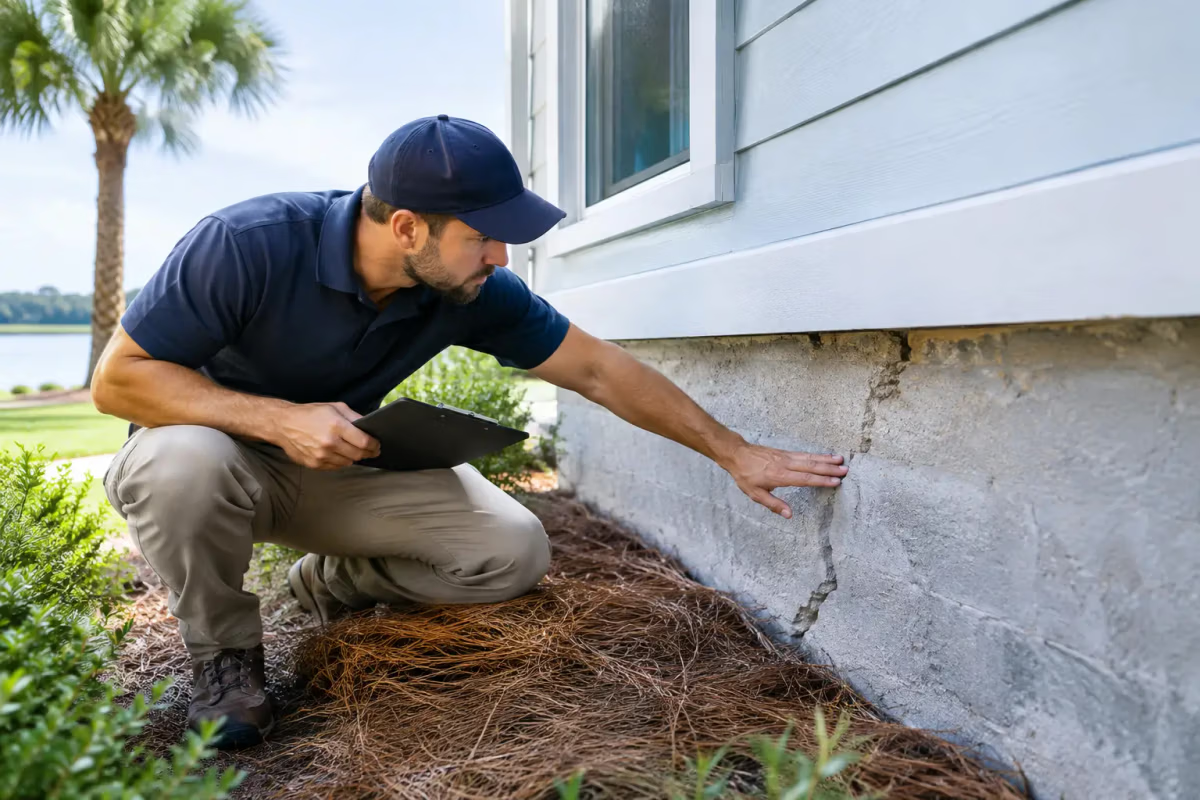
A mold sample can produce a precise laboratory result and still fail to answer the question a homeowner actually has: Is there a moisture problem in this house, and what should be done about it? Mold test accuracy depends on much more than the lab report. The property conditions, sample location, type of testing, visual evidence, and inspector’s experience all affect whether the final result is useful for a purchase, repair decision, or family health concern.
For homes in Jacksonville, St. Augustine, and throughout Northeast Florida, that context matters. Humidity, wind-driven rain, plumbing leaks, roof issues, and air-conditioning condensation can create conditions where mold growth develops behind finishes or in areas that are not obvious during a walk-through. Reliable testing starts with a thorough inspection, not a sample taken at random.
What Mold Test Accuracy Really Measures
Mold testing does not diagnose a medical condition or certify that a home is completely mold-free. Mold spores exist naturally outdoors and can enter any house through doors, windows, HVAC systems, and normal daily activity. A single air sample is a snapshot of conditions at a specific place and time.
Accuracy, then, means the sample was collected properly, handled correctly, analyzed by a qualified laboratory, and interpreted alongside the conditions found at the property. A reliable result helps identify unusual indoor spore levels, specific fungal types, hidden moisture concerns, or a need for further investigation. It should not be treated as a stand-alone pass-or-fail score.
A good inspection also recognizes that visible growth does not always require laboratory confirmation before action is taken. When an active leak has caused apparent microbial growth on building materials, the priority is identifying the moisture source and determining the appropriate repair or remediation scope. Testing can still be useful, but it is only one part of the evidence.
Why One Mold Sample May Not Tell the Full Story
Airborne mold levels change. Opening a door, running the HVAC system, recent rain, construction activity, a pet moving through the room, or even a ceiling fan can affect what is captured in an air sample. This does not make mold testing unreliable. It means sampling must be planned and interpreted with care.
The most dependable approach compares indoor findings with an outdoor control sample when appropriate. Because outdoor air normally contains mold spores, the comparison helps determine whether indoor conditions appear elevated or unusual for that property on that day. An experienced inspector also considers the types of spores identified, not only the total count.
For example, an indoor sample with a higher count than outdoors may deserve attention, but the conclusion depends on where the sample was taken and what the inspection found. Conversely, a low air count does not automatically rule out a localized issue inside a wall cavity, beneath flooring, or under a sink. Mold growth that is sealed behind a surface may not release enough spores into the room air to be captured at that moment.
Surface sampling can help answer a different question. Tape lifts, swabs, or bulk samples may identify whether a suspicious material contains fungal growth. They are particularly useful when there is visible staining, a musty odor, or a concern in a confined area. They do not, however, measure the general air quality of the home.
The Inspection Behind the Test Matters Most
Testing is strongest when it follows a systematic moisture and condition assessment. Before samples are collected, the inspector should look for the conditions that allow mold to grow: water intrusion, elevated moisture, poor drainage, roof defects, plumbing leaks, condensation, inadequate ventilation, and HVAC concerns.
In Northeast Florida, several areas commonly deserve close attention. Bathrooms and laundry rooms can retain moisture when ventilation is limited. Attics can show signs of roof leakage or condensation. Air handlers, drain pans, supply registers, and ductwork can be affected by cooling-system moisture. Crawl spaces, garages, exterior wall areas, and windows may also reveal water entry after heavy rain or storm events.
Advanced moisture-detection tools and thermal imaging can help identify areas that require closer evaluation. These tools do not “see mold,” but they can reveal temperature differences or elevated moisture patterns that point to a potential source. That is a far more practical starting point than testing every room without a reason.
At House Authority Inspection Service, mold evaluations are approached as part of protecting the whole property decision. A clear report should document relevant observations, explain what testing was performed, identify limitations, and outline practical next steps. For buyers and out-of-state clients, detailed photos and timely reporting can be especially valuable when decisions need to be made quickly.
When Mold Testing Is Most Useful
Mold testing is not necessary for every home, but it can provide useful evidence in the right situation. It is often worth considering when there is a persistent musty odor without a visible source, signs of water damage, recent flooding or roof leakage, recurring HVAC moisture, or concern about indoor air quality.
Testing may also help during a real estate transaction when a buyer wants more information about a suspicious area before inspection contingencies expire. Sellers may use it to clarify a concern and plan repairs before listing. Homeowners can benefit after a water event, especially when materials were wet for more than a day or two, or when they want to confirm that an area has been properly addressed.
There are limits. If active growth and a clear moisture source are already evident, collecting samples should not delay necessary repairs. And if a family member has health symptoms, a property inspection report should not replace guidance from a qualified healthcare professional. The home can be evaluated for moisture and environmental conditions, while medical questions belong with medical providers.
How to Get More Reliable Results
Homeowners can improve mold test accuracy by providing a complete picture before the inspection. Mention past leaks, prior repairs, flooding, odors that come and go, HVAC problems, and rooms where stains or condensation have appeared. A problem that occurred months ago may still explain why a specific area deserves closer attention.
Avoid trying to “prepare” the home by heavily cleaning suspect surfaces, spraying fragrances, or running air purifiers immediately before a scheduled assessment unless the inspector gives specific instructions. Those actions can change conditions and make it harder to evaluate the concern as it normally exists. Normal occupancy and normal HVAC operation are often most representative, though testing protocols may vary by situation.
It also helps to ask what the results will and will not tell you. A dependable inspector can explain the sampling method, why particular areas were selected, whether an outdoor comparison is appropriate, and how visual observations affect the interpretation. The goal is not to generate a complicated report. It is to provide real results you can use to make a sound decision.
Questions to Ask About a Mold Report
A useful report should answer practical questions. Was there evidence of moisture intrusion? Were indoor findings consistent with outdoor conditions? Did the inspector observe visible staining, damaged materials, or conditions that could support growth? Does the property need repair, further evaluation, or professional remediation?
Be cautious with anyone who promises that a single sample can guarantee a house is safe or unsafe. Homes are dynamic environments, and honest reporting includes limitations. The most trustworthy findings connect laboratory data with what was observed on-site and explain the next reasonable action without unnecessary alarm.
Accurate Results Lead to Better Property Decisions
The value of mold testing is not in a number by itself. It is in reducing uncertainty. For a buyer, that may mean knowing whether a stained ceiling is likely tied to an active roof issue. For a homeowner, it may mean finding the moisture source behind a recurring odor before damage spreads. For a seller, it may mean addressing a concern with documentation rather than leaving questions for the next inspection.
In a humid coastal and inland Florida climate, moisture control remains the best long-term defense. Prompt repairs, properly functioning HVAC drainage, good bathroom ventilation, controlled indoor humidity, and regular checks after storms can prevent many concerns before testing is ever needed.
If you are facing a mold concern, choose an inspection partner who looks beyond the sample and focuses on the condition of the home. Clear evidence, practical recommendations, and fast reporting give you a stronger path forward when your family, investment, or transaction is on the line.