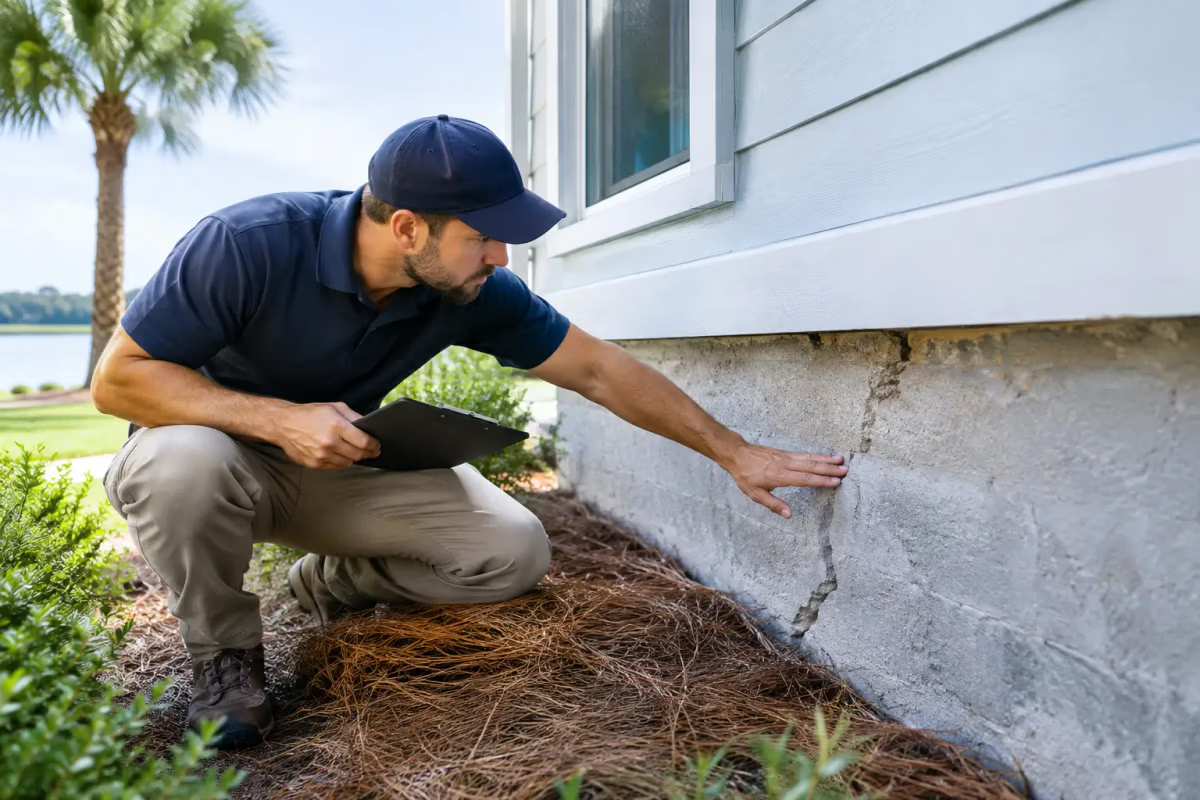
A foundation concern rarely announces itself with one dramatic sign. More often, foundation defects show up as a door that suddenly sticks, a crack that keeps returning after repair, or a floor that feels slightly out of level. For Northeast Florida buyers and homeowners, recognizing those clues early can protect a major investment, prevent costly surprises, and support better decisions before a closing or renovation.
Not every crack means a home is failing, and not every sloping floor points to a serious structural problem. The right response is neither panic nor dismissal. It is a careful inspection, clear documentation, and, when conditions warrant, evaluation by the appropriate qualified specialist.
Why Foundation Conditions Matter in Northeast Florida
Jacksonville, St. Augustine, and surrounding Northeast Florida communities have a mix of older homes, new construction, coastal conditions, sandy soils, high groundwater, and periods of heavy rain. Those factors can influence how water moves around a home and how soils support its structure.
Many residential foundations in this area are concrete slabs, although crawlspace foundations are also common in certain neighborhoods and older properties. A slab can perform well for decades, but it depends on stable support, proper drainage, and thoughtful construction. Crawlspace homes depend on sound piers, beams, framing, ventilation, and moisture management.
Water is often part of the story. Rainwater that pools near the perimeter, downspouts that discharge too close to the house, leaking plumbing, or poor grading can contribute to soil movement and moisture concerns. Dry periods can also affect certain soils. The issue is not simply whether a property has experienced rain or settlement. It is whether movement, moisture, or deterioration has created conditions that affect the home’s structural performance.
For a buyer, foundation-related findings can change repair negotiations, financing timelines, and future maintenance plans. For a homeowner, they can identify a problem before cosmetic damage becomes more extensive. For sellers, addressing known concerns honestly and early can reduce the risk of late transaction delays.
Common Signs of Foundation Defects
A professional home inspection looks for visible indicators throughout the structure rather than relying on a single symptom. These signs need to be viewed together, with attention to location, direction, size, condition, and whether there is evidence of ongoing movement.
Cracks in walls, ceilings, slabs, or masonry
Hairline cracks in drywall are common and may result from normal material movement, temperature changes, or minor settling. Wider cracks, stair-step cracks in masonry, cracks that are displaced from one side to the other, or cracks that continue through multiple building materials deserve closer attention.
On a concrete slab, cracks may be visible in garages, patios, porches, or interior flooring where finishes have been removed. A crack alone does not establish the cause or severity. Its pattern and relationship to other conditions matter.
Doors and windows that no longer operate properly
A door that rubs its frame, will not latch, or has a widening gap at the top or bottom can be a clue. So can windows that bind or no longer open smoothly. Hardware wear, humidity, and ordinary seasonal movement may be responsible, particularly in Florida’s humid climate. When several doors and windows show similar changes, however, an inspector will consider whether broader movement may be involved.
Uneven floors and separated finishes
Floors that feel sloped, soft, bouncy, or uneven may point to a variety of conditions. In a crawlspace home, damaged framing, inadequate support, wood deterioration, or moisture can affect floor performance. In a slab home, movement beneath the slab may be a possibility.
Interior finishes can also provide useful clues. Baseboards pulling away from walls, cracked tile, separated countertops, and gaps around trim do not diagnose a foundation issue by themselves. They help build the overall picture.
Exterior drainage and soil conditions
The ground around a home should generally direct water away from the foundation. Low areas beside the structure, standing water after rain, eroded soil, missing gutters, and downspouts that empty at the wall can all increase the chance of moisture-related concerns.
Exterior observations are especially valuable because they may identify a practical maintenance issue before it contributes to more significant damage. Improving drainage is often less costly than correcting conditions after they have affected the structure.
What a Home Inspection Can and Cannot Determine
A comprehensive home inspection is a strong first step when foundation concerns are visible or suspected. The inspector evaluates accessible areas of the interior, exterior, roof drainage components, structure, crawlspace when present, and surrounding site conditions. Findings are documented with clear descriptions and photos so buyers, homeowners, and real-estate professionals can understand what was observed.
A home inspector does not typically perform destructive testing, remove finished flooring or wall coverings, calculate structural loads, or provide engineering design. Those services fall outside the scope of a standard visual inspection. If there are signs of significant movement, structural distress, or conditions that cannot be fully evaluated visually, a structural engineer or another qualified specialist may be recommended.
That distinction matters. A responsible inspection report should not overstate what visible evidence proves. It should identify material concerns, explain why they matter, and recommend the next appropriate step. This approach gives clients real results without guessing at causes that require additional analysis.
When Foundation Defects Affect a Home Purchase
A foundation-related finding does not automatically mean a buyer should walk away from a property. The decision depends on the type of concern, whether movement appears active, the recommended repair, available documentation, the property’s age, and the buyer’s comfort with the risk.
If an engineer recommends repairs, buyers should request a written scope of work and pricing from qualified contractors. They should also ask whether permits, warranties, and final documentation will be provided. A low estimate without a defined repair method can create more uncertainty than it removes.
Previous repairs are not necessarily a red flag. Many homes have had drainage improvements, crack repairs, underpinning, or crawlspace support work completed successfully. What matters is whether the repair was professionally documented, whether the area appears stable, and whether related issues such as drainage or moisture were also addressed.
Out-of-state buyers and military families relocating to Northeast Florida may have limited ability to revisit a property before the inspection period ends. Detailed photos, prompt reporting, and a clear explanation of recommended follow-up can make the process far more manageable from a distance.
Practical Steps Homeowners Can Take
Homeowners cannot control every source of soil movement, but routine attention can reduce avoidable water-related stress around a foundation. Keep gutters clear, extend downspouts away from the home where appropriate, and watch for areas where soil has settled against the structure. After heavy rain, walk the perimeter and note ponding water, washout, or areas that remain saturated.
Inside, track changes instead of repeatedly covering them up. If a crack reopens after patching, a door begins sticking after years of normal operation, or new gaps appear in several rooms, take dated photos. That record can help an inspector or specialist determine whether a condition appears stable or is changing over time.
Crawlspace homes need particular attention to moisture. Plumbing leaks, inadequate drainage, damaged vapor barriers, wood decay, and insect activity can affect components that support the living area above. A WDO inspection and moisture-focused evaluation may be useful when signs of deterioration or pest activity are present.
A Clearer Path to Confident Decisions
Foundation concerns are easiest to manage when they are found early, described accurately, and matched with the right next step. House Authority Inspection Service provides Northeast Florida buyers and homeowners with comprehensive inspections, visual documentation, and same-day reporting to help identify visible structural and moisture-related concerns alongside other major property conditions.
Whether you are reviewing a home before closing, preparing to sell, or responding to changes in your current home, do not let uncertainty sit beneath the surface. Schedule an inspection service, ask direct questions about what was observed, and use the findings to make a practical plan for protecting your home and family.