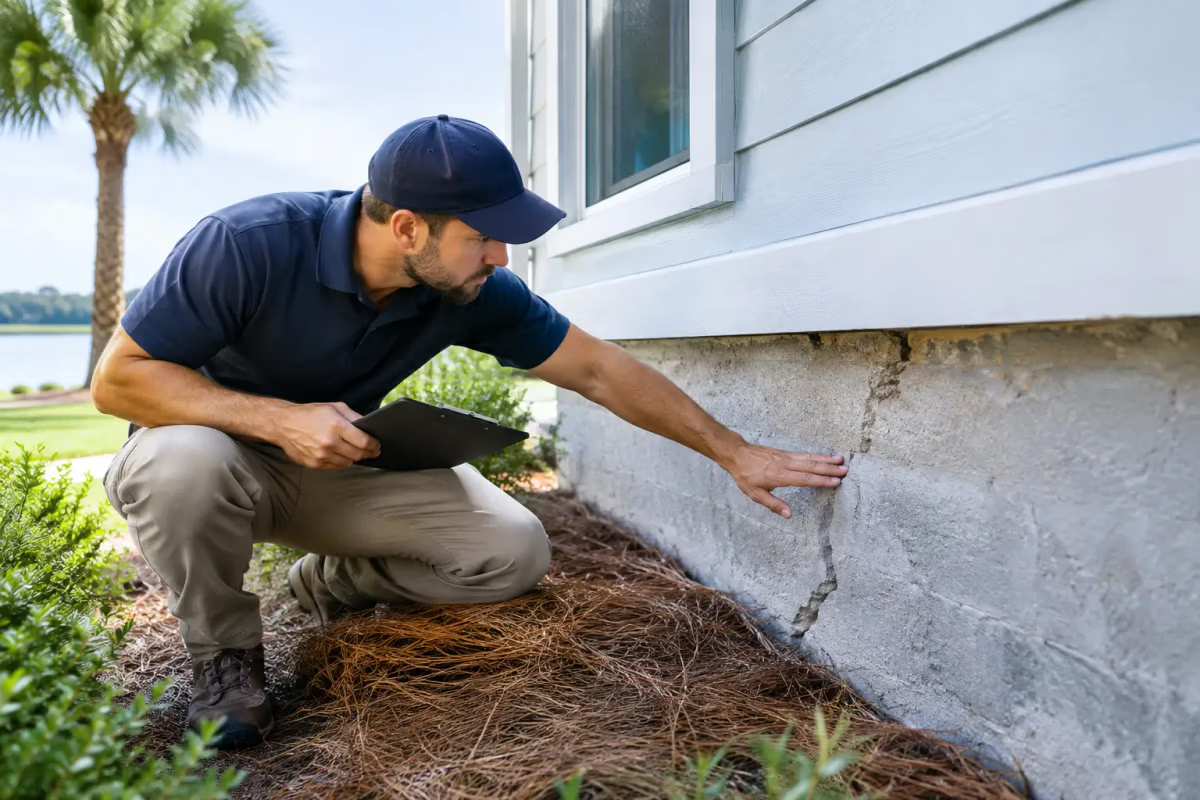
A polished report means little if the person behind it is not qualified to evaluate the home. The right home inspector credentials help protect your purchase, your family, and your ability to make informed decisions before the inspection period ends. In Northeast Florida, where humidity, coastal weather, aging systems, and insurance requirements can all affect a property, qualifications should be part of your hiring decision from the start.
A home inspection is not a guarantee that nothing will fail after closing. It is a professional assessment of visible and accessible conditions at a specific point in time. Credentials help show that your inspector has met professional, licensing, training, and insurance standards to perform that assessment responsibly.
Start With an Active Florida Home Inspector License
For a standard residential home inspection in Florida, the first credential to verify is an active state home inspector license. Florida regulates home inspectors through the Department of Business and Professional Regulation. Licensed inspectors must meet education, examination, and insurance requirements before they can practice.
That license matters because it establishes a baseline. It indicates the inspector has completed required training, passed a state-approved examination, and is subject to Florida rules governing the profession. A license also gives consumers a clear way to verify whether the inspector is active and in good standing.
Still, a license is the starting point, not the entire story. Two inspectors may both be licensed, yet their field experience, reporting quality, specialized qualifications, and familiarity with local construction can be very different. A buyer looking at a 1950s Jacksonville bungalow, a newer Saint Johns development, or a coastal St. Augustine property needs an inspector who understands the issues that can appear in those homes.
Experience Gives Credentials Real-World Value
Training teaches inspection standards. Experience teaches an inspector where those standards meet real homes.
Northeast Florida properties can present conditions that are easy to underestimate: moisture intrusion around windows and stucco, aging electrical panels, roof wear from sun and storms, elevated humidity in attics and crawl spaces, pool equipment concerns, and wood-destroying organism activity. An experienced inspector knows how these conditions may appear visually, what additional testing may be appropriate, and how to explain the finding without creating unnecessary alarm.
Ask how long the inspector has worked in residential inspections and whether they regularly inspect homes in your area. It is also reasonable to ask about experience with the type of property you are purchasing, whether that is a historic home, condo, new construction, waterfront property, or home with a pool and spa.
Credentials should support experience, not replace it. A trusted inspection partner combines formal qualifications with years spent evaluating the systems and conditions found in actual homes.
Professional Association Membership Signals Commitment
Membership in a respected professional organization, such as the American Society of Home Inspectors (ASHI), can be another meaningful indicator. Association membership alone does not make an inspector better, but it often reflects a commitment to professional standards, continuing education, and ethical conduct.
ASHI members work within recognized standards of practice that define the general scope of a home inspection. These standards help set expectations for what an inspector will examine, such as roofing, exterior components, structure, plumbing, electrical systems, heating, cooling, interiors, insulation, and ventilation.
Just as important, standards clarify the limits of an inspection. Home inspectors generally do not dismantle walls, move furniture, operate every appliance, predict remaining service life with certainty, or provide engineering opinions unless separately qualified. A professional inspector explains those limits clearly while documenting observed concerns with useful photos and practical recommendations.
Specialized Home Inspector Credentials Matter in Florida
Many of the most important concerns in a Florida home fall outside a basic visual home inspection. That is why specialized qualifications matter, especially when you need reports for health, insurance, financing, or transaction decisions.
Mold Assessment and Indoor Air Quality
Florida’s warm, humid climate creates conditions where moisture problems can develop quickly. Visible staining, musty odors, elevated moisture readings, past water damage, and HVAC concerns may call for a more focused mold assessment or indoor air quality investigation.
Mold assessment is separately regulated in Florida. If you need mold sampling, a mold assessment report, or professional guidance on the source and extent of a potential problem, ask whether the inspector holds the appropriate Florida mold assessor credential. This is distinct from simply noting possible microbial growth during a general inspection.
A qualified assessment should focus on the cause of the moisture, not just the presence of a surface condition. The most useful next step may be repairing a roof leak, correcting drainage, addressing an HVAC issue, or improving ventilation. Testing can provide valuable information, but it should be selected based on the property and concern rather than treated as a one-size-fits-all service.
Radon Testing
Radon is a naturally occurring radioactive gas that can enter a home through soil and foundation openings. It cannot be seen or smelled, so testing is the only way to determine a home’s radon level during the test period.
Ask whether the provider is properly qualified to perform radon measurement services and uses approved equipment and procedures. Radon results are time-sensitive and depend on proper test placement and conditions. A reliable provider will explain the testing process, provide clear results, and help you understand when follow-up testing or mitigation discussions may be appropriate.
WDO Inspections
Wood-destroying organisms, including termites and certain wood-destroying fungi, are a major concern for Florida property owners. A standard home inspection may identify visible signs of damage or conditions that could encourage activity, but it is not the same as an official WDO inspection.
A WDO inspection requires the appropriate pest control credentials and documentation. If your lender, contract, or peace of mind calls for a WDO report, make sure the company providing it is authorized to perform that service. This distinction matters because a general inspector should not represent a visual observation as an official WDO clearance.
Wind Mitigation, 4-Point, and Roof Certifications
Insurance inspections have their own requirements. A 4-point inspection typically focuses on four major systems: roof, electrical, plumbing, and HVAC. A wind-mitigation inspection documents qualifying construction features that may help an insurer evaluate available discounts. Roof certification reports may also be requested depending on the carrier and policy situation.
The right credentials for these services depend on the form, insurer, and purpose of the inspection. An inspector should understand the applicable report requirements, document findings carefully, and avoid promising an insurance outcome. A favorable inspection may support eligibility or discounts, but the insurer makes the final underwriting decision.
Insurance Protects Both the Inspector and the Client
A qualified inspector should carry appropriate business insurance. General liability coverage is an essential question to ask because inspections take place on active properties, often during real-estate transactions involving multiple parties.
You may also hear about errors and omissions coverage. This type of insurance is designed to address certain professional claims related to inspection services. Coverage can vary, so there is no need for a client to become an insurance expert. What matters is that the inspector is prepared to operate professionally and can provide proof of coverage when appropriate.
Be cautious of anyone who dismisses insurance questions or cannot clearly explain their qualifications. A lower inspection fee can become expensive if it comes with thin documentation, delayed reporting, or limited accountability.
What to Ask Before You Schedule
Before selecting an inspector, ask direct questions and pay attention to how clearly they answer. You want to know whether the home inspector license is active, what specialized services can be completed in-house, how long the inspector has worked locally, and when you will receive the report.
Also ask to see a sample report. A useful report is not simply a long checklist. It should be organized, photo-documented, understandable, and focused on conditions that affect safety, major expenses, maintenance priorities, and further evaluation. For out-of-state buyers and busy military families, detailed photos and prompt delivery are especially valuable when attending the inspection is not possible.
One coordinated appointment can also make a meaningful difference. When general inspection findings, radon testing, water sampling, mold assessment, pool inspection, and insurance reports are handled through a capable one stop shop, you spend less time coordinating vendors and more time evaluating the property.
Credentials Should Lead to Clearer Decisions
The goal is not to hire the inspector with the longest list of initials. The goal is to hire someone whose licensing, specialized qualifications, local experience, technology, and reporting process fit the home you are buying or maintaining.
House Authority Inspection Service brings more than 24 years of inspection experience to buyers and homeowners across Jacksonville, Saint Johns, St. Augustine, and surrounding Northeast Florida communities. With qualified inspection services, same-day report turnaround, and coordinated testing options, the focus stays where it belongs: real results that help you move forward with confidence.
Before your next purchase, insurance application, or home-safety decision, take a few minutes to verify credentials and ask the right questions. A well-qualified inspector does more than identify concerns – they give you practical information when the decision still matters.