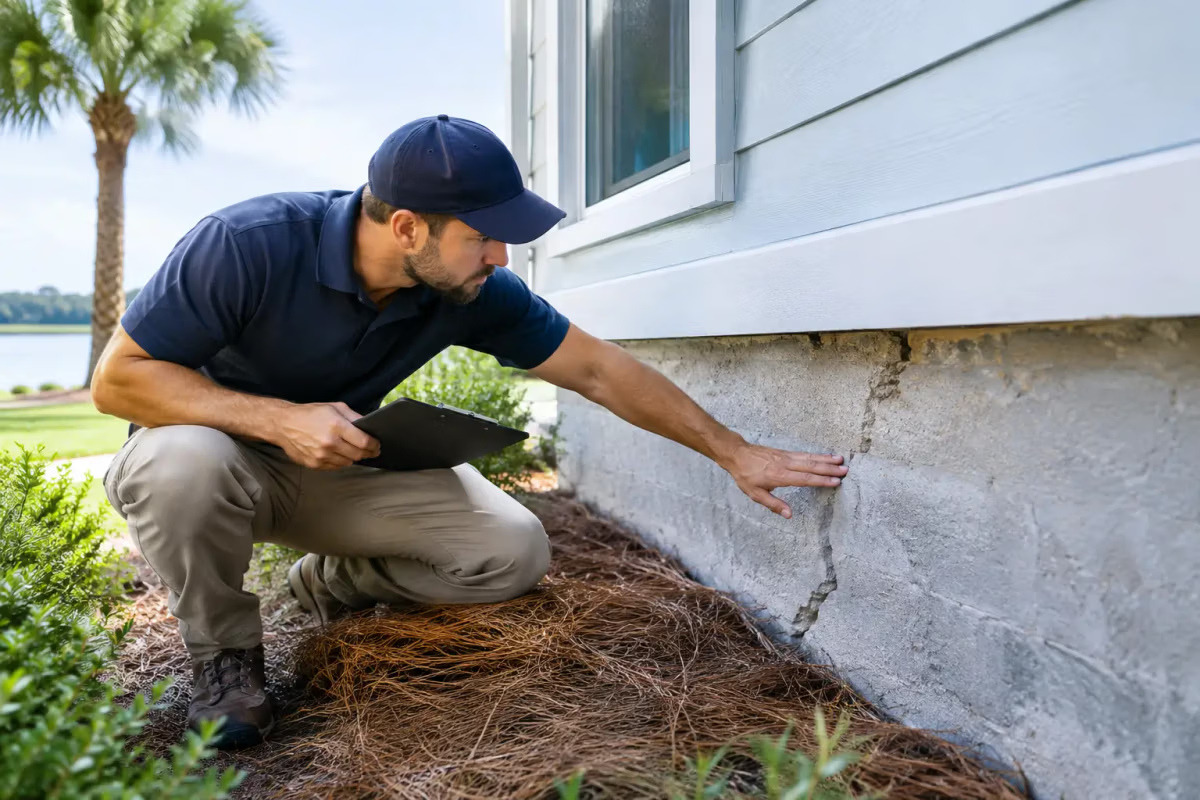
Jacksonville homes work hard against humidity, heavy rain, storm-driven leaks, and year-round air-conditioning use. That combination can create hidden moisture conditions long before a visible stain appears. Mold testing Jacksonville FL gives buyers, homeowners, and sellers objective information when a property’s indoor environment or moisture history raises questions.
A musty smell, recurring condensation, a past roof leak, or discoloration near an air vent does not automatically mean a home has a serious mold problem. It does mean the condition deserves a careful look. The right inspection combines a detailed visual assessment with appropriate sampling, documentation, and practical next steps – not guesswork or unnecessary alarm.
When Mold Testing Makes Sense
Mold testing is most valuable when there is a reason to investigate. For a buyer, that reason may be water staining discovered during a general home inspection, a reported plumbing repair, or a home that has been vacant with the HVAC system off. For a current homeowner, it may be an ongoing odor, visible growth, repeated indoor humidity issues, or moisture that returns after a repair.
Testing can also be a smart precaution after a roof leak, appliance overflow, supply-line failure, flooding event, or hurricane-related water intrusion. Even when surfaces appear dry, moisture can remain in wall cavities, beneath flooring, behind cabinets, or around HVAC components. Prompt evaluation helps separate a resolved incident from a condition that may need further attention.
Common reasons to schedule an evaluation include:
- A persistent musty or earthy odor without an obvious source
- Visible staining, spotting, peeling paint, or warped materials near a moisture source
- A documented history of leaks, flooding, roof damage, or plumbing repairs
- Concerns around bathrooms, kitchens, laundry rooms, attics, crawl spaces, or air-conditioning systems
- A real-estate transaction where buyers need clearer information before moving forward
Not every concern requires laboratory sampling. If active visible growth and a clear moisture source are present, the priority may be correcting the moisture problem and planning appropriate cleanup. On the other hand, sampling can be helpful when the concern is hidden, when the extent is unclear, or when indoor conditions need to be compared with outdoor conditions.
What a Professional Mold Inspection Looks For
A mold inspection is not simply a walk through the house with an air pump. Reliable results begin with the building itself. An inspector looks for the pathways that allow moisture to enter or remain: roof penetrations, plumbing leaks, poor drainage, condensation, damaged caulking, bathroom ventilation issues, HVAC concerns, and damp areas beneath or behind finishes.
In Northeast Florida, the inspection often focuses closely on cooling systems and humidity control. Air conditioners remove moisture as they cool the home, but a clogged condensate line, damaged drain pan, poorly insulated ductwork, or oversized system can contribute to moisture problems. Attics and garages can also be affected by humid outdoor air, roof leaks, and insufficient ventilation. In homes with crawl spaces, moisture management below the living area can influence conditions above it.
A qualified inspector documents accessible observations with photos and clear findings. Moisture meters, thermal imaging, and other assessment tools may help identify areas that warrant closer review. These tools do not identify mold species on their own, but they can reveal temperature differences or elevated moisture that point to a possible concealed issue.
When sampling is appropriate, the inspection plan should match the concern. Air samples may help evaluate airborne mold levels in a specific area. Surface samples may help characterize suspicious material. The number and location of samples depend on the home’s layout, the reported history, visible conditions, and the question that needs to be answered. A one-size-fits-all testing package is rarely the best approach.
What Laboratory Results Can and Cannot Tell You
Laboratory results can provide useful data, but they need context. Mold spores exist naturally outdoors and can enter any home through doors, windows, clothing, pets, and ventilation. A report showing spores does not, by itself, prove that a home has an active indoor mold source or that the property is unsafe.
The most useful interpretation considers several factors together: the types of spores found, the relative levels indoors and outdoors, the areas sampled, the property’s moisture history, and the inspector’s visual observations. A result may support the need for additional investigation, targeted repairs, or remediation. It may also indicate that no unusual indoor condition was identified in the sampled areas at that time.
Testing has limits. Sampling represents conditions at a particular moment, not every room or every hidden cavity in a house. Normal activities, weather, open windows, HVAC operation, and recent cleaning can affect air-sample results. That is why a trustworthy inspection report should explain what was observed, what was sampled, and what the findings mean for the property decision at hand.
Mold Testing During a Jacksonville Home Purchase
For buyers, timing matters. A mold concern found during the inspection period should be addressed while there is still time to request records, seek further evaluation, negotiate repairs, or decide whether to proceed. Waiting until after closing can turn a manageable question into an unexpected expense.
An out-of-state buyer may be especially dependent on thorough photos, plain-language reporting, and responsive coordination with a real-estate agent. A detailed report helps the buyer understand whether the concern appears limited to a repaired plumbing leak, involves an area that needs specialty review, or warrants a broader discussion with the seller.
Sellers benefit from clarity as well. If a past moisture event has been repaired, documentation of the repair and a current professional assessment can help reduce uncertainty. If a problem is still present, finding it before listing or before a buyer’s inspection allows the seller to make decisions on a more controlled timeline.
Mold concerns can overlap with other property conditions. A roof certification, general home inspection, water-quality test, WDO inspection, or indoor air quality assessment may provide related information depending on the property. Coordinating appropriate inspection services in one appointment can save time while giving the client a more complete picture of the home.
After Mold Testing: Focus on the Moisture Source
If testing or inspection identifies a concern, the first question is usually not, “How do we remove the mold?” It is, “Where is the moisture coming from, and has it stopped?” Cleaning or remediation without correcting the underlying cause can lead to recurring problems.
The right solution depends on the location and extent of the condition. It could involve repairing a roof or plumbing leak, improving bathroom exhaust, clearing an HVAC condensate drain, sealing an exterior penetration, replacing water-damaged materials, or improving drainage around the foundation. Larger or concealed conditions may require evaluation and work by a qualified remediation professional.
Homeowners should be cautious about covering stains with paint, applying fragrance products to mask odors, or treating a broad issue as a simple cleaning project. Those approaches can obscure evidence without resolving moisture. Before significant work begins, take photos, preserve repair records, and make sure the scope addresses both the affected materials and the cause of the water intrusion.
For homes with occupants who have health concerns, a physician is the appropriate source for personal medical guidance. An inspection can identify building conditions and environmental findings, but it does not diagnose illness or determine individual health effects.
Choose Clear Reporting and Local Experience
The value of mold testing is not a number on a lab report. It is the ability to make a sound decision about a home, whether that means moving forward with a purchase, requesting repairs, monitoring a previously repaired area, or taking action to protect indoor conditions.
House Authority Inspection Service brings more than 24 years of inspection experience to Northeast Florida properties, with detailed assessments, visual documentation, and same-day report turnaround when timing matters. Buyers, homeowners, and real-estate professionals can schedule the appropriate inspection services in one coordinated appointment instead of managing multiple providers.
If a Jacksonville property has a moisture history or an indoor-air concern, address it while the evidence is still available. A careful inspection today can provide the clarity needed to protect your family, your investment, and your next decision.